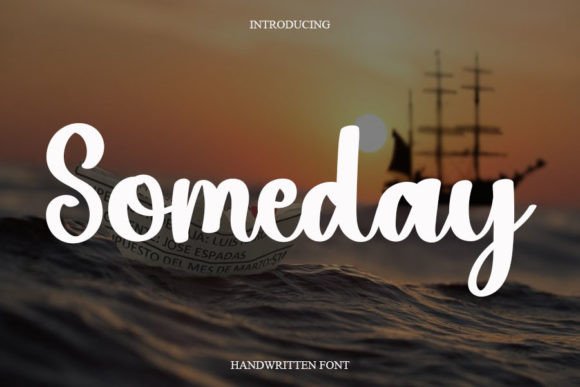
Someday Script Handwritten Font for Branding and Packaging
I was sitting at my kitchen table last Tuesday with a stack of blank kraft labels, a fresh batch of product photos on my phone, and a growing sense that my brand needed a subtle but meaningful upgrade. The products were solid—small-batch candles made with coconut wax and essential oils—but the look on the labels felt flat. I had been using the same generic sans serif for two years, and it wasn't saying what I wanted it to say. That afternoon I opened my font library, clicked on Someday, and everything clicked. This Script Handwritten typeface has that rare combination of clean structure and playful personality. It felt polished enough for a premium product but warm enough to feel personal. If you run a small business—whether you sell skincare, baked goods, boutique clothing, or digital templates—choosing the right fonts can transform how customers perceive your work before they even read a single word.
Someday for Logo Design and Brand Identity
When I first tested Someday for a logo concept, I was struck by how it balanced elegance with a slightly quirky edge. The strokes are graceful without being fussy, and the letterforms have a natural rhythm that feels handwritten but not sloppy. For a small business owner, this is gold. Your logo needs to appear on your website header, your social media profile, your product packaging, and maybe even your invoice template. A Script Handwritten font like this one gives you a consistent visual signature that looks intentional across every touchpoint. I tried it on a mockup for a lavender soy candle label, and suddenly the whole brand felt more cohesive. The font became the anchor of the identity. Whether you are launching a new brand or refreshing an existing one, Someday works beautifully as the primary display typeface for your logo because it is distinctive without being illegible.
Someday for Product Labels and Packaging Design
Packaging is where typography earns its keep. A customer standing in a shop or scrolling through an online marketplace makes a judgment about your product in seconds. I used Someday on a set of product labels for a small-batch honey brand I help with, and the difference was immediate. The handwritten quality suggested craftsmanship and care, while the clean proportions meant the text was still readable at the small size of a jar lid. This font excels on packaging because it feels premium without being pretentious. It works especially well for short phrases—product names, scent titles, ingredient highlights—where you want a touch of personality. If you sell skincare, candles, gourmet food, or handmade gifts, Someday can elevate your packaging from homemade to artisanal with a single typeface choice. The key is to use it as the star of the label and pair it with a simple sans serif for regulatory text or ingredient lists.
Someday for Social Media Graphics and Digital Content
Social media is a crowded space, and your visuals need to stop the scroll. I have been updating my own Instagram templates with Someday for quote cards, product announcements, and story highlights, and the engagement has noticeably improved. The font has a friendly, approachable feel that resonates well with lifestyle and creative audiences. Because it is a Script Handwritten typeface, it adds a human touch to digital graphics that can otherwise feel overly polished or generic. I recommend using it for headlines, overlay text on product photos, and promotional banners. It reads well on mobile screens when kept at a moderate size, and the slight irregularity in the letterforms makes each post feel a little more authentic. For small business owners who manage their own content, Someday is a practical tool for building a consistent visual voice across Instagram, Pinterest, Facebook, and even your email newsletter headers.
Someday for Business Cards, Thank-You Cards, and Physical Stationery
There is something special about handing a customer a business card or slipping a thank-you note into an order. Physical stationery is an extension of your brand, and Someday brings a warmth that digital screens cannot replicate. I printed a small run of thank-you cards using this font for a friend who runs a ceramic studio, and the response from customers was immediate—several people commented on how elegant and personal the cards felt. The font works beautifully on uncoated paper stocks where the slight texture catches the ink. Whether you are designing hang tags for your clothing line, menu cards for a café, or packaging inserts for an online shop, Someday adds a layer of craftsmanship that makes customers feel valued. It is especially effective for short messages like "thank you," "handmade with love," or your shop name. For physical items, always test the font at the actual print size to ensure the quirky details remain readable.
Pairing Someday with Other Fonts for a Complete Brand Look
No single typeface can do everything, and part of building a professional brand identity is knowing how to pair fonts thoughtfully. Someday pairs naturally with clean sans serif fonts like Montserrat, Lato, or Open Sans for body text, website copy, and secondary information. The contrast between the handwritten elegance of Someday and the straightforward simplicity of a sans serif creates visual hierarchy and makes your design easier to read. For a more editorial or luxurious feel, you can also pair it with a refined serif font such as Playfair Display or Cormorant Garamond. When I designed a small café menu, I used Someday for the section headers and a light sans serif for the descriptions, and the combination felt both charming and professional. Avoid pairing it with another script or handwritten font, as that can quickly become visually chaotic. The magic happens when you let Someday be the expressive voice and let a simpler partner handle the reading.
Readability and Practical Use of Someday in Marketing Materials
One concern business owners often have with Script Handwritten fonts is readability, especially at small sizes or on mobile screens. I tested Someday on a product banner at 24 pixels and on a label at about 0.5 inches, and the clarity held up well in both cases. The font is not overly ornate, which is its strength. The letter spacing is generous enough that words do not blur together, and the ascenders and descenders are balanced. For best results, use Someday for headlines, product names, short taglines, and decorative text rather than long paragraphs. It is a display font by nature, meaning it shines when given space to breathe. On social media graphics, keep it at least 30 pixels for legibility on smaller screens. On printed packaging, avoid sizes smaller than 10 points unless you are using it purely as a decorative accent. With those simple guidelines, you can deploy Someday confidently across your entire brand ecosystem without sacrificing readability.
File Formats, Licensing, and What to Check Before You Buy
Before you download any font for commercial use, it is worth checking the included file formats, alternates, ligatures, and licensing terms. Someday typically comes with OTF and TTF formats, which work across both Mac and Windows systems. If you plan to use the font for product packaging, merchandise, client projects, or digital templates, make sure the license covers commercial use. Some Script Handwritten fonts include stylistic alternates and ligatures that let you customize the look of certain letter combinations—these are especially useful for logo design where you want a unique lockup. I always test a font in my design software before purchasing a full license to confirm it includes the glyphs I need, such as accented characters for multilingual packaging or special punctuation. If you are buying Someday for a client or for products you intend to sell, double-check whether the license covers that specific use case. A few minutes of verification now can save you from legal headaches later.
When I look back at that stack of kraft labels on my kitchen table, I remember how one typeface changed everything. Someday is not just another Script Handwritten font—it is a practical tool for making your small business look more intentional, more polished, and more memorable. Whether you are designing your first logo, refreshing your product line, or building a cohesive brand identity across packaging and social media, this font offers the perfect balance of elegance and personality. Your customers may not know why your new labels feel different, but they will notice. And that is the quiet power of good typography.