Octighost: A Modern Handwritten Signature Font for Branding Projects
I opened a blank brand board last week, staring at the mood board I had built for a small skincare studio. The client wanted something warm, personal, and modern—not sterile, not corporate, not like every other minimalist brand out there. I had tested a handful of script fonts, but nothing clicked. Then I dropped Octighost onto the canvas. The difference was immediate. This cool, modern handwritten signature font brought exactly the kind of organic, human energy I was after. Within minutes, the logo draft started to feel like something real.
Testing Octighost on a Real Brand Identity Project
When I first loaded Octighost into my design software, I was curious how it would hold up in a full brand system. So many handwritten fonts look great as a single wordmark but fall apart when you try to use them across multiple touchpoints. I started with the studio name on a simple white background, then moved to mockups: a business card, a product label, a homepage hero section. The font held its character at every size. The strokes stayed clean, the rhythm felt natural, and the signature style added a personal touch that no sterile sans serif could match. For a Script Handwritten Font, it walked the line between personality and professionalism well.
Why Octighost Works as a Logo and Display Font
Octighost is not a font you want to use for long paragraphs of body text—it is a display font, a headline font, a logo font. Its strength is in short-form applications where the letterforms can breathe. On the brand board, I used it for the main logotype, a tagline, and a few accent words on a product card. The signature style gave each piece a hand-drawn feel, but the consistency of the font kept everything cohesive. For a logo, you want something that feels intentional but not stiff, and Octighost delivers exactly that balance. It is cool without being cold, modern without being trendy.
How Octighost Brings a Handwritten Signature Feel to Logo Design
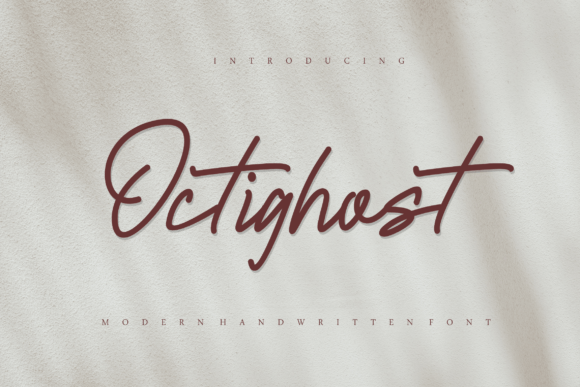
I placed the client’s brand name in Octighost at 72pt, and the first thing I noticed was the natural flow between letters. Unlike some script fonts that feel artificially connected, Octighost has a relaxed, authentic rhythm—like someone wrote it with a fine pen on good paper. The slight variations in stroke weight and the casual slant give it a signature quality that is hard to manufacture. For a small skincare brand, that handmade feel was exactly what the identity needed. It tells customers, “This is a real person behind this business,” which is invaluable for a boutique or creative studio.
Pairing Octighost with a Serif Font for a Balanced Brand System
No font works alone in a real project. I paired Octighost with a clean serif font for the body copy and secondary text—the ingredients list on a label, the about section on a website, the contact details on a business card. The contrast was striking. The serif brought structure and readability, while Octighost added warmth and personality. This kind of pairing is common in modern branding, and it works because the two typefaces support each other without competing. Octighost is strong enough to lead the visual identity, but it also knows when to step back and let a supporting typeface carry the details.
Using Octighost on Packaging, Labels, and Printed Materials
I exported a few mockups for the client: a glass jar label, a small product box, and a paper shopping bag. On the label, Octighost appeared as the brand name at the top, with the product name in a smaller size below. The font remained legible at 14pt, which is not always the case with handwritten styles. The ink-like texture of the letterforms translated well to print, giving the packaging a premium, artisan feel. For a handmade shop or a local restaurant, this kind of typography can elevate the entire unboxing experience. It makes the product feel like it was made with care, not mass-produced.
Octighost for Social Media Graphics and Digital Content
Digital use is where Octighost really shines. I built a set of Instagram story templates using the font for headlines and short quotes. The handwritten style caught the eye immediately, especially on a mobile screen where clean sans serifs can sometimes feel too clinical. For a creative studio or a boutique brand, having a font that works across both print and digital is a huge time-saver. Octighost stayed consistent on the website header, the product page titles, and the email newsletter. It is versatile enough to handle the demands of a full brand system without losing its signature personality.
What to Check Before Using Octighost in Commercial Work
Before I commit to a font for a client project, I always check a few practical details. With Octighost, I looked at the included character set, any alternates or ligatures, and the available file formats. The font offers standard ligatures and a selection of alternate characters, which gives you some flexibility when customizing a wordmark. I also confirmed the multilingual support, since the client’s product line might expand to other markets. For commercial font licensing, it is always wise to read the terms carefully, especially if you are using the font for client work, merchandise, or digital assets. Octighost is a premium font, and treating it as a professional tool from the start saves headaches later.
How Octighost Affects Readability and Visual Hierarchy
In the brand system, I used Octighost for the primary logo mark and a few accent headlines, but I kept the body text in a clean serif. This created a clear visual hierarchy: the signature font pulled attention, while the supporting typeface carried the information. Readability was never a problem, even at smaller sizes, as long as I gave the font enough space. Handwritten fonts can feel crowded if you pack them too tightly, so I made sure to use generous letter-spacing and line-height in the digital layouts. The result was a brand identity that felt open, airy, and approachable—exactly what the client wanted.
Final Impressions on Octighost as a Script Handwritten Font
After a few rounds of client feedback, the brand board evolved into a finished identity. The logo, the packaging, the social media templates, and the website all used Octighost as the anchor. The client loved it, and more importantly, their customers responded well to the warm, human feel of the typography. For a graphic designer testing a new font on a real project, Octighost proved to be more than just a cool style—it was a functional, reliable tool that elevated the entire brand. Whether you are working on a wedding invitation, a product label, a creative studio identity, or a local restaurant menu, this modern handwritten signature font has the potential to become a go-to asset in your font library. It is the kind of typeface that makes you want to start a new project just to use it again.